Amplify
Designing a Rule-Based Guidance System for K–8 Learning
How should educational software decide when to help—and when to let students struggle?
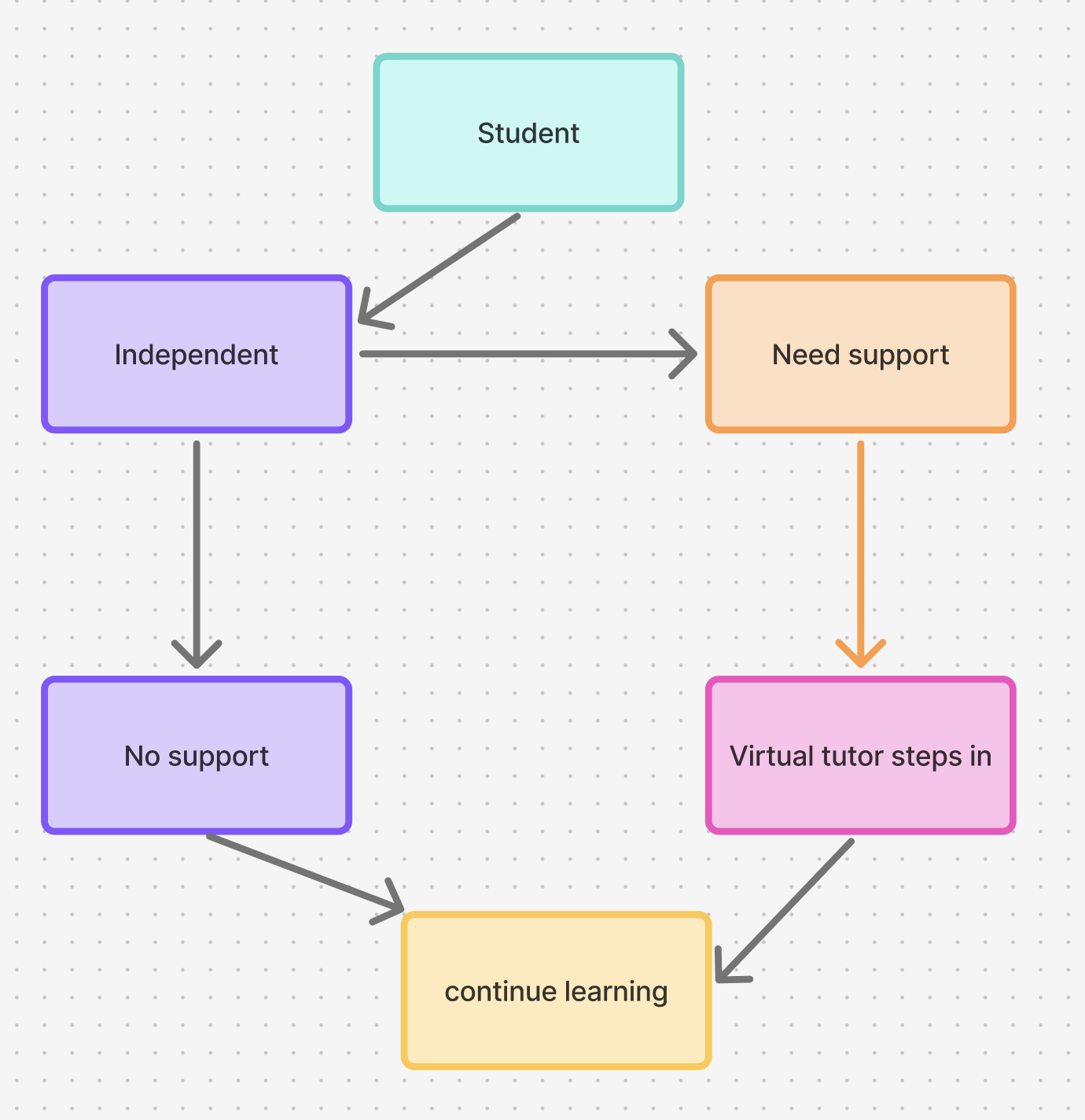
Overview
At Amplify, I partnered with Product, Engineering, Curriculum, and User Research to design the interaction system behind the Virtual Tutor. My role focused on translating learning goals into interaction rules that determined when guidance appeared, how students progressed, and how support adapted across K–8 learners.
We developed two behavior models:
K–5: structured guidance to build confidence
Grades 6–8: delayed intervention to encourage independence
Collaboration Model
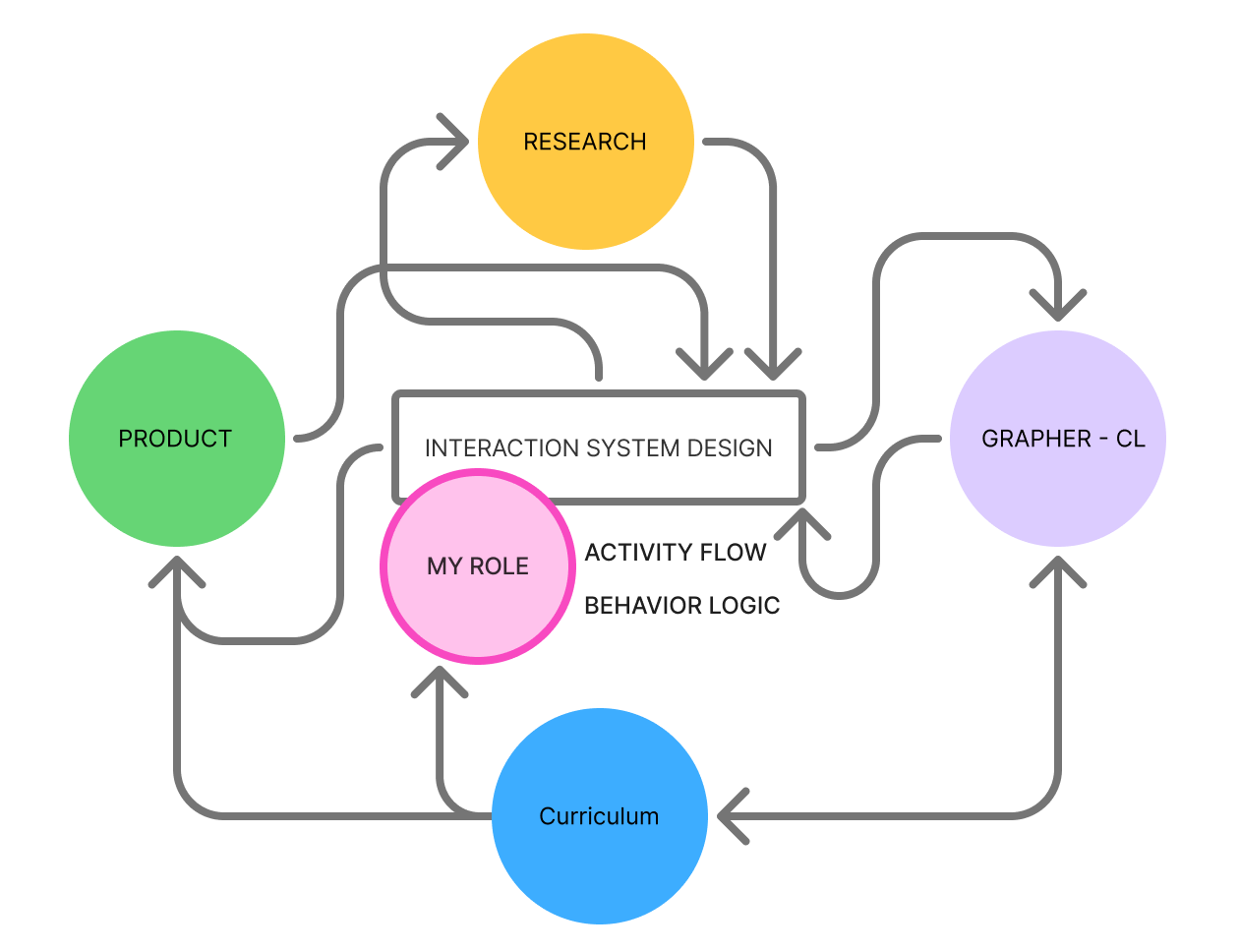
This system was developed cross-functionally:
Product: defined learning goals and made final decisions
Curriculum: ensured instructional alignment
Research: validated timing and effectiveness of guidance
Engineering: implemented interaction rules and edge cases
My role: translated inputs into a structured interaction system with clear rules, flows, and documentation
My key contributions
Defined interaction rules and progression logic
Designed attempt-based guidance thresholds
Co-designed Grades 6–8 activity flow with Product
Documented system behavior for Engineering implementation
Aligned interaction design with Curriculum and Research inputs
Iterated system based on usability findings
The Challenge
The challenge was defining when and how a Virtual Tutor should intervene in student problem solving.
We needed a system that:
supported younger learners without blocking momentum
preserved independence for older learners
remained consistent across a large set of activities
could be implemented reliably by Engineering
The solution required a clear, rule-based interaction model rather than ad-hoc guidance behaviors.
Grade Comparison
K-5
Needs confidence
Frequent feedback
Immediate help
Grades 6–8
Wants independence
Exploration
Delayed intervention
Interaction System (Core Framework)
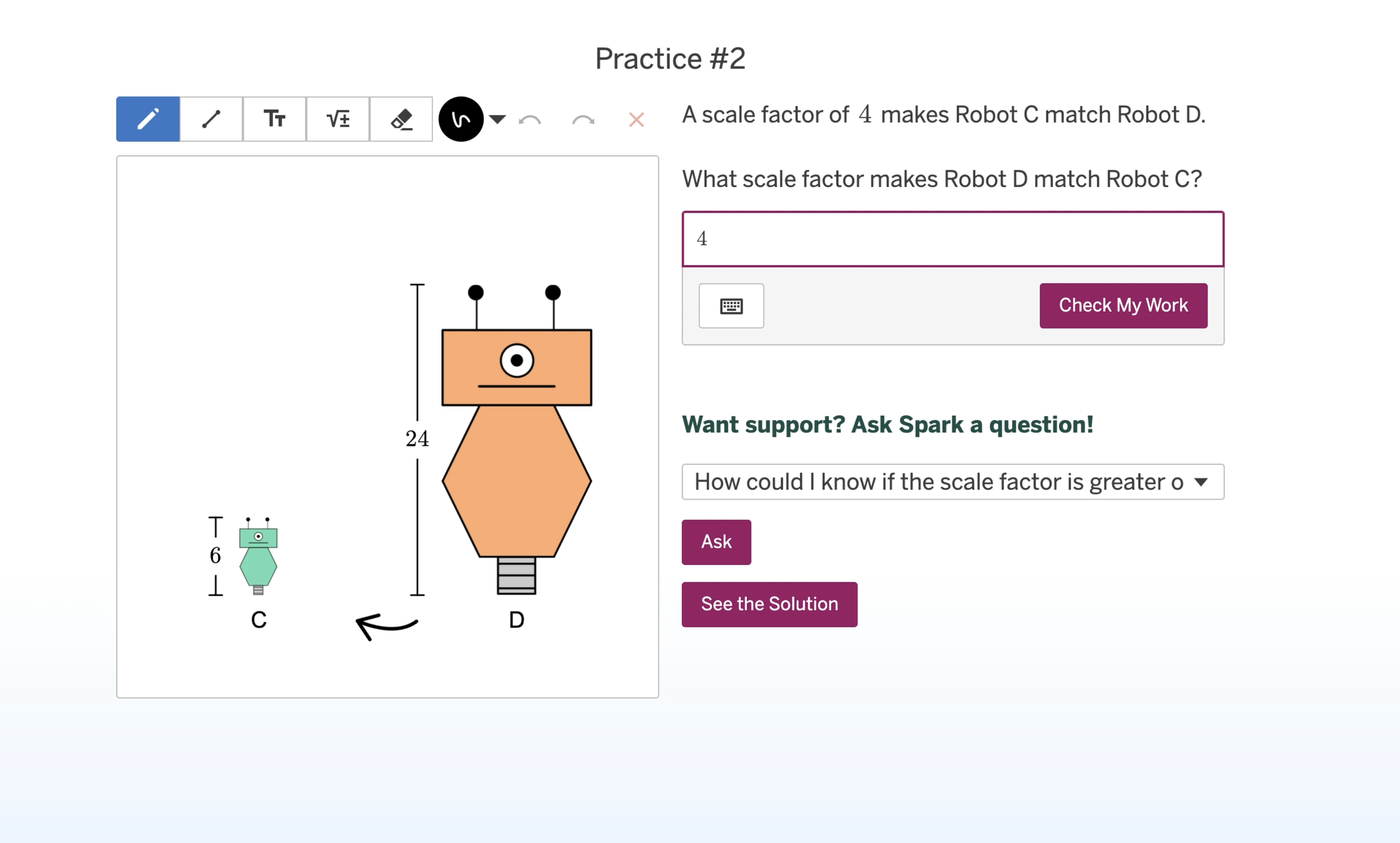
The Virtual Tutor followed a rule-based system driven by:
grade level
number of attempts
completion state
Each rule defined:
when support becomes available
when support escalates
when support becomes required
how progression continues
This ensured consistent behavior across all learning activities.
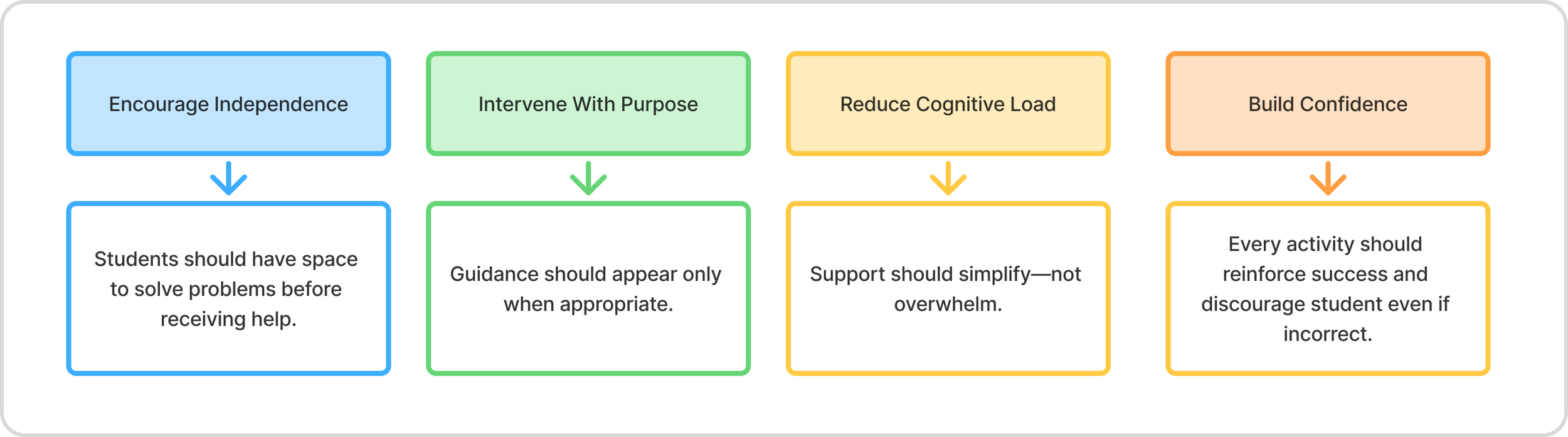
Principles
Rule-Based Guidance Progression
Each incorrect attempt triggered a predefined level of support.
This progression encouraged persistence while preventing students from becoming stuck on a single problem.
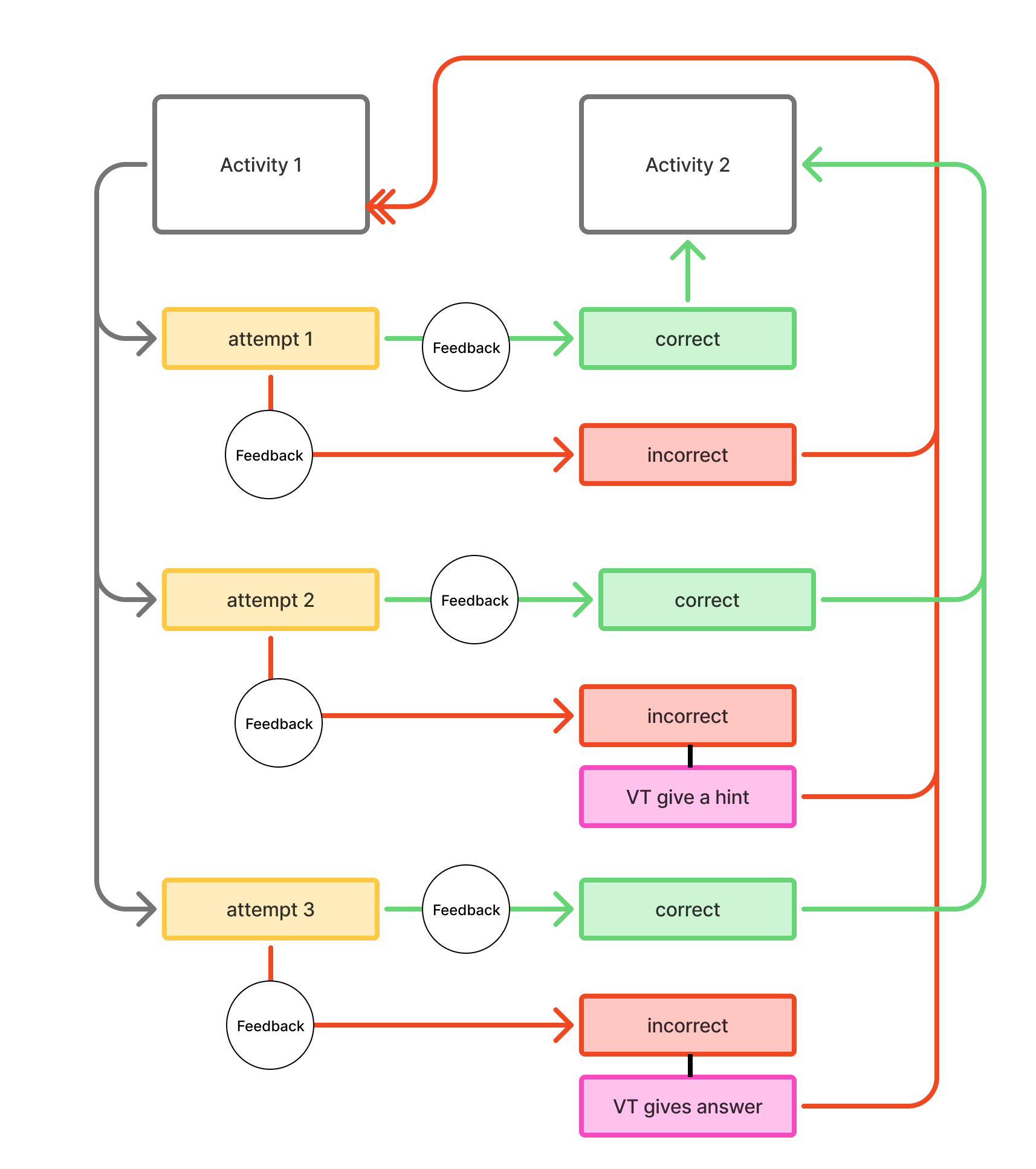
This diagram shows how a K-5 student moves from one activity to the next.
K–5 Interaction System
Goal: Build confidence through active support.
Younger learners received earlier and more explicit guidance to maintain momentum and reduce frustration.
Three-Attempt Progression
Attempt 1: Interpretive feedback encourages another independent try.
Attempt 2: The Virtual Tutor provides a contextual hint.
Attempt 3: The Virtual Tutor reveals the solution, explains the reasoning, and advances the student to the next activity.
Beyond Attempt 3: After the solution is revealed, students may continue submitting answers. Incorrect responses trigger the solution to be shown again, and progression is locked until the correct answer is entered.
Why this worked
Younger students often persist without seeking help. Early structured intervention helped prevent frustration while maintaining engagement.
Grades 6–8 Interaction System
Design Goal: Encourage independence through thoughtful support.
Older learners were given more time to explore and solve problems independently before receiving structured guidance.
We tested an interaction model that allowed students to choose whether to begin with support or attempt the problem on their own.
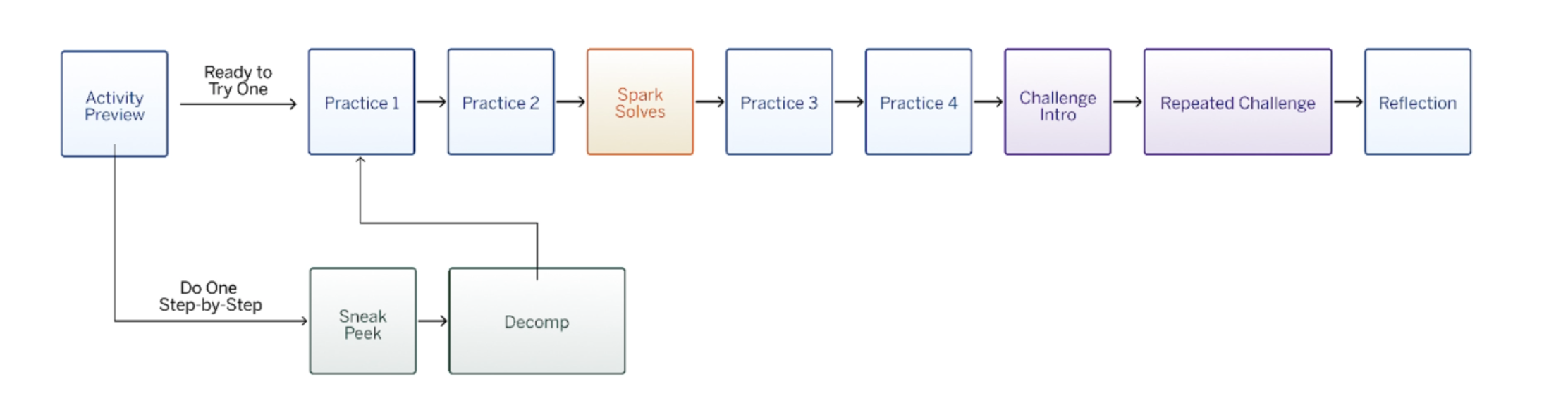
Independent Progression
Start: Students choose independent entry
Attempts 1–2: Independent work (optional access to Virtual Tutor)
After Attempt 2: Required interaction with Virtual Tutor
After Attempt 4: Problem decomposition option becomes available
After Attempt 5: Guided decomposition is initiated
Step by Step Progression
Start: Students choose guided entry
Attempts 1: Independent work
Attempt 2: The Virtual Tutor provides a contextual hint.
Attempt 3: The Virtual Tutor reveals the solution, explains the reasoning, and advances the student to the next activity.
Beyond Attempt 3: After the solution is revealed, students may continue submitting answers. Incorrect responses trigger the solution to be shown again, and progression is locked until the correct answer is entered.
Why this worked
Students engaged more deeply when allowed to struggle before receiving support. Delayed intervention improved persistence and ownership.
Comparing the Interaction Systems
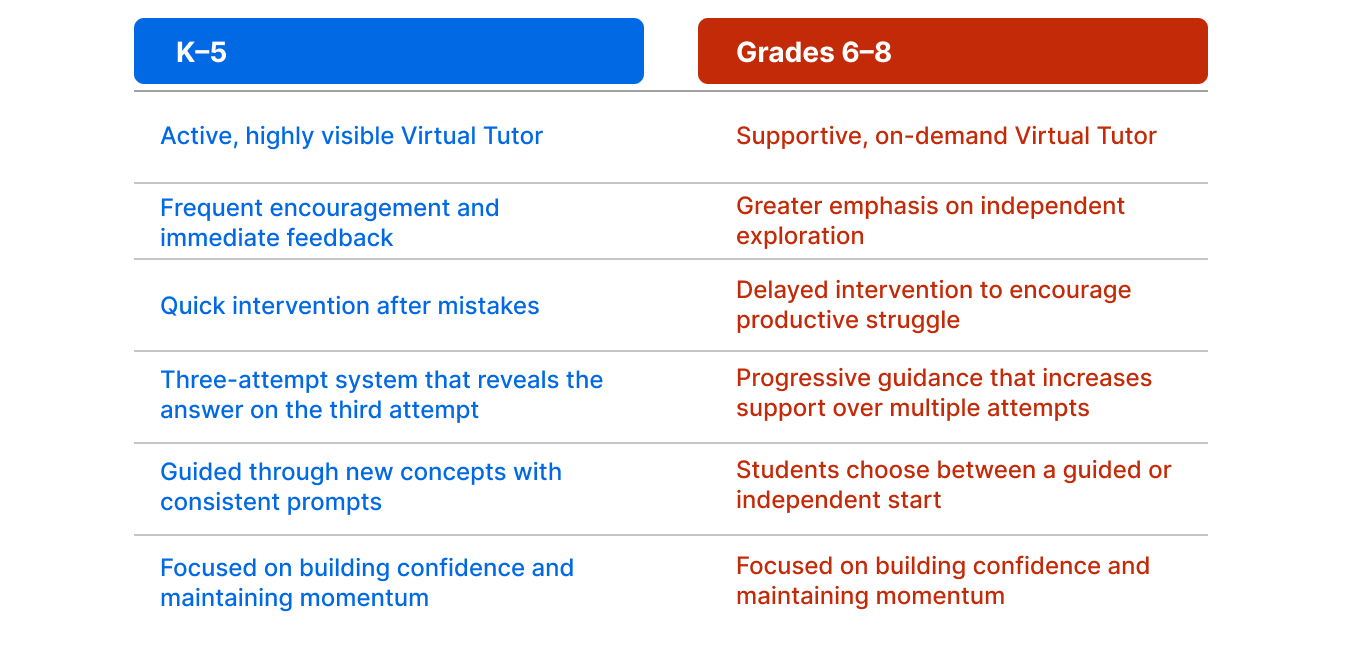
Both systems shared the same rule-based foundation.
The difference was timing of intervention:
K–5 → early scaffolding
6–8 → delayed, progressive support
This allowed a single framework to adapt across developmental stages.
Implementation Layer
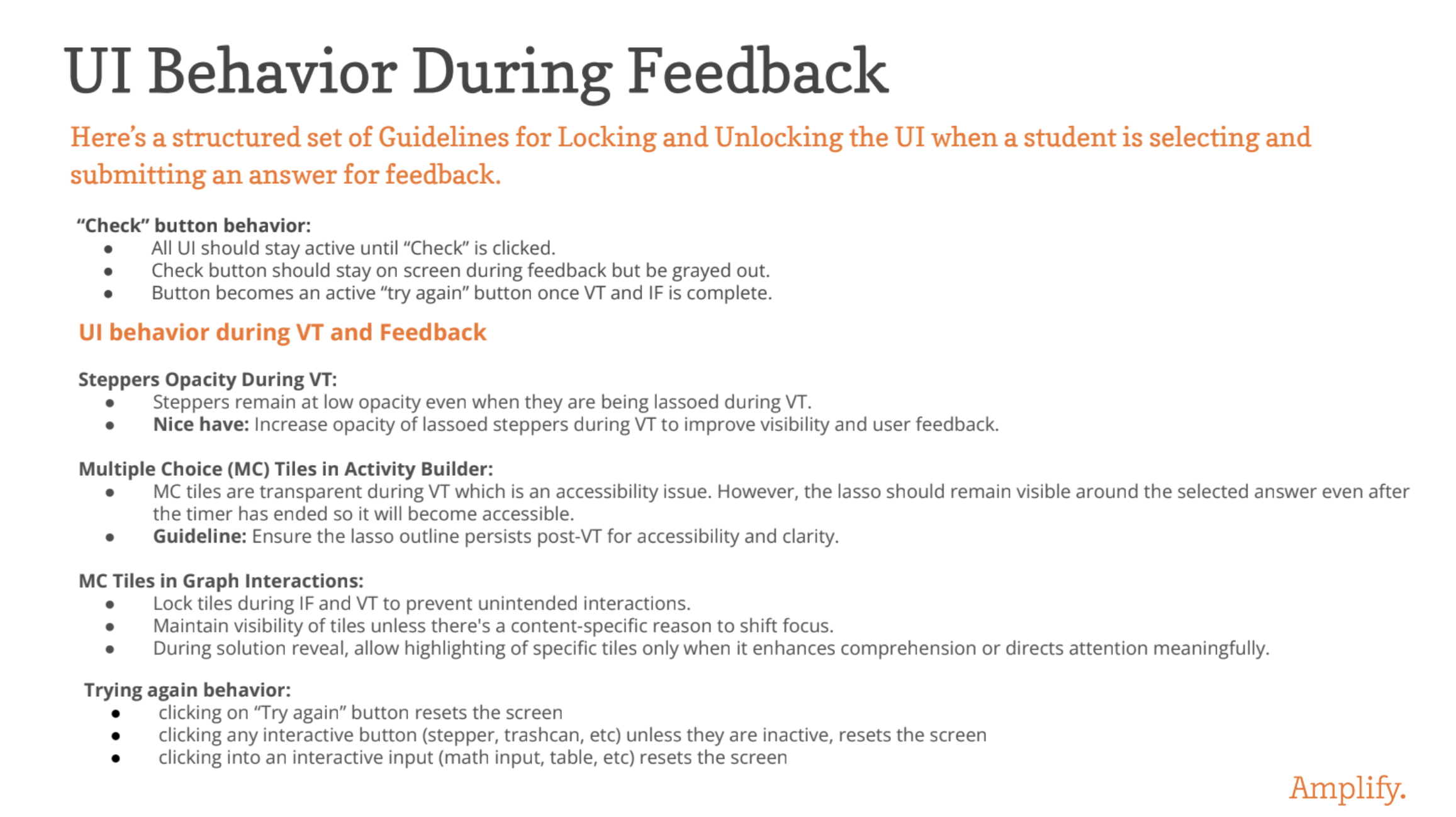
Screenshot from K-5 production guidelines. You can view the document here.
Interaction Rules
I defined a set of interaction rules that translated the system into implementable behavior for Engineering.
Each rule specified:
the trigger condition (e.g., incorrect attempt count)
the system response (hint, encouragement, decomposition, etc.)
the progression outcome (what the student sees next)
These rules ensured the Virtual Tutor behaved consistently across all activities and could be implemented without ambiguity.
Documentation
Created and maintained a production handbook that documented interaction behaviors, UX standards, and reusable patterns, providing teams with a shared reference that improved consistency and streamlined collaboration.
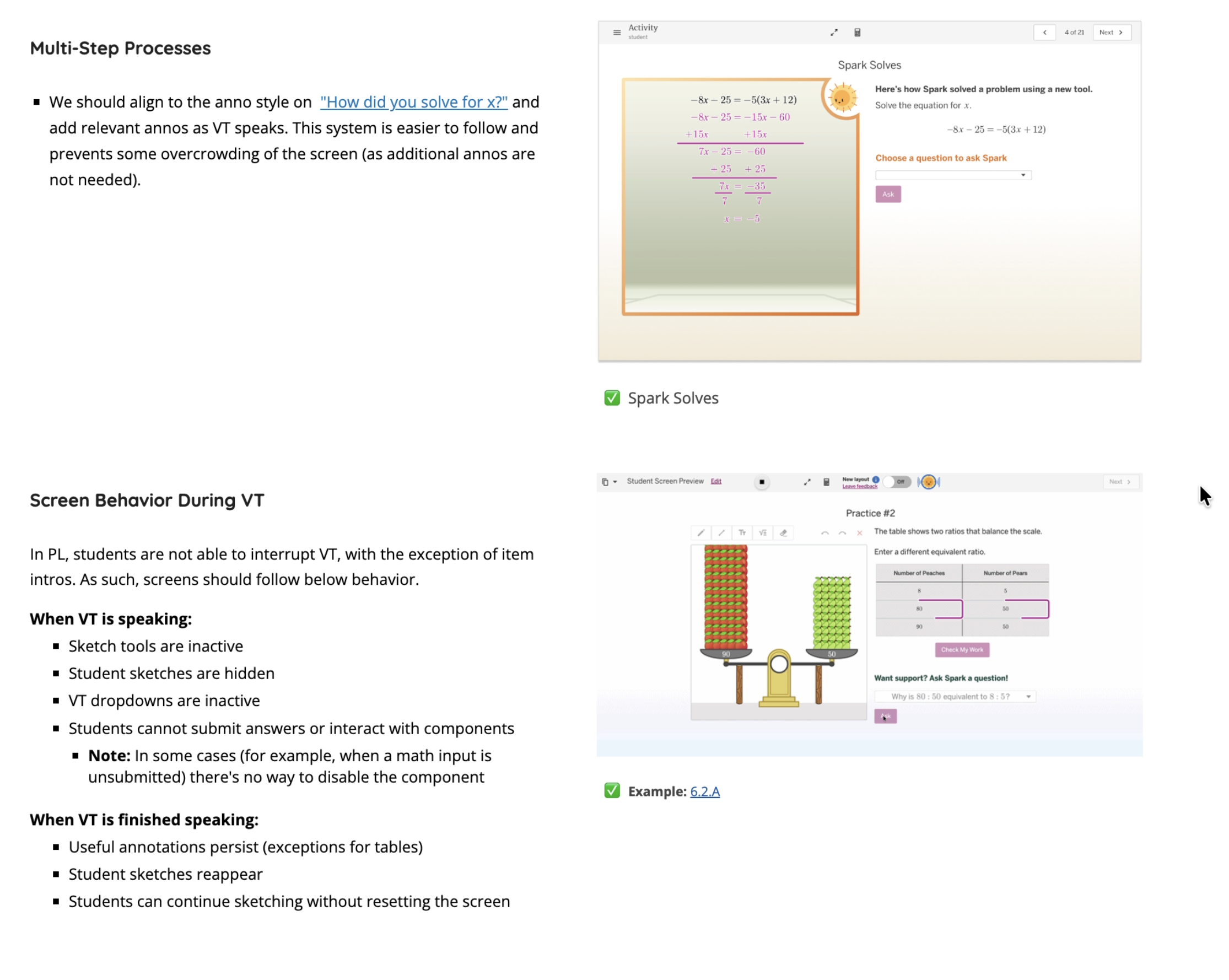
Screenshot of 6-8 Virtual Tutor behavioral guidelines. You can see a video scroll of it here.
Visual Communication Standards
To ensure consistent implementation across teams, I defined visual communication standards for how the Virtual Tutor’s guidance appeared in the product.
These standards gave Design and Engineering a shared visual language for implementing guidance consistently across the product.
Documentation
Created and maintained a living design handbook that documented interaction behaviors, UX standards, and reusable patterns, providing teams with a shared reference that improved consistency and streamlined collaboration.
Validation and Iteration
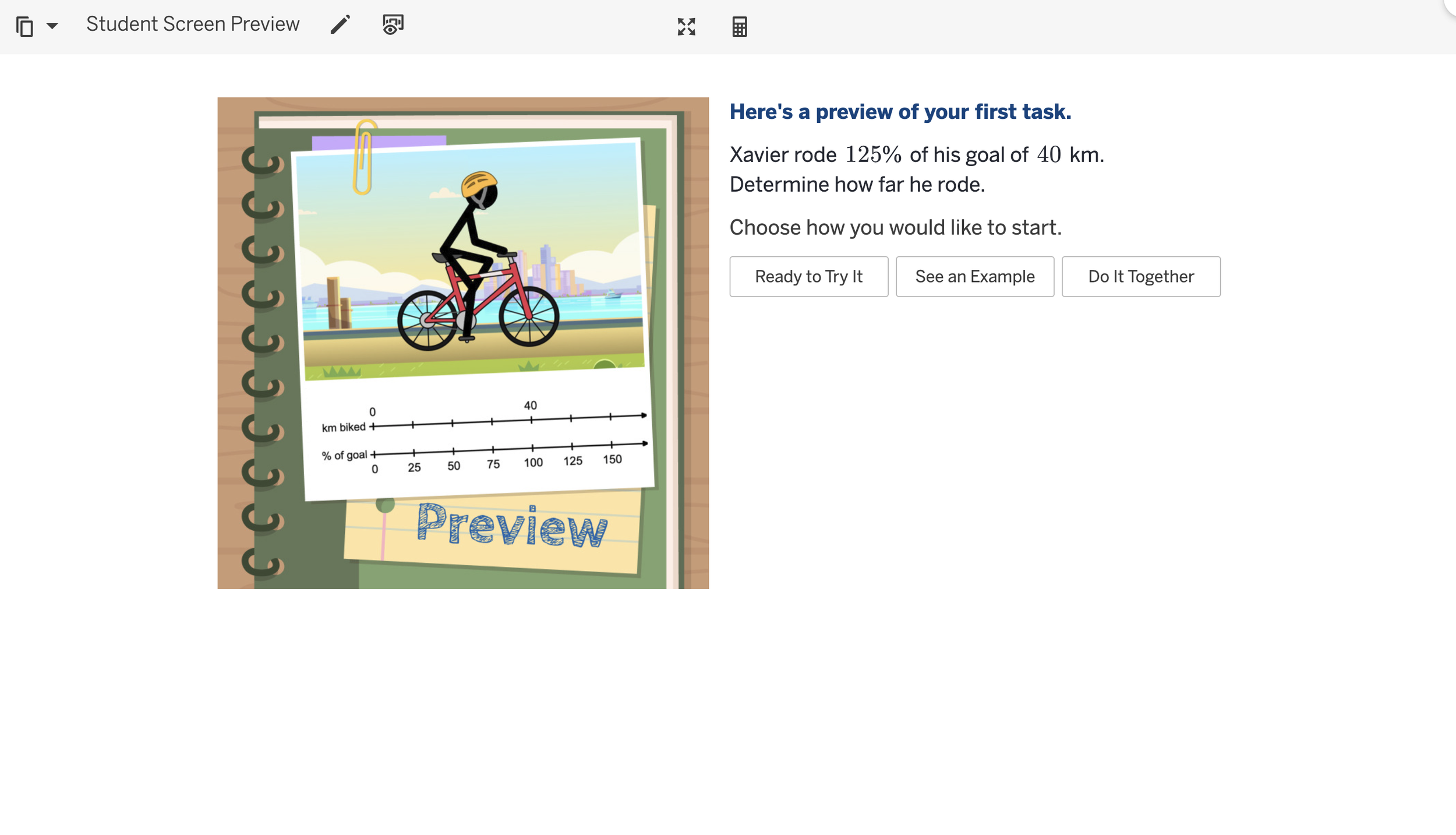
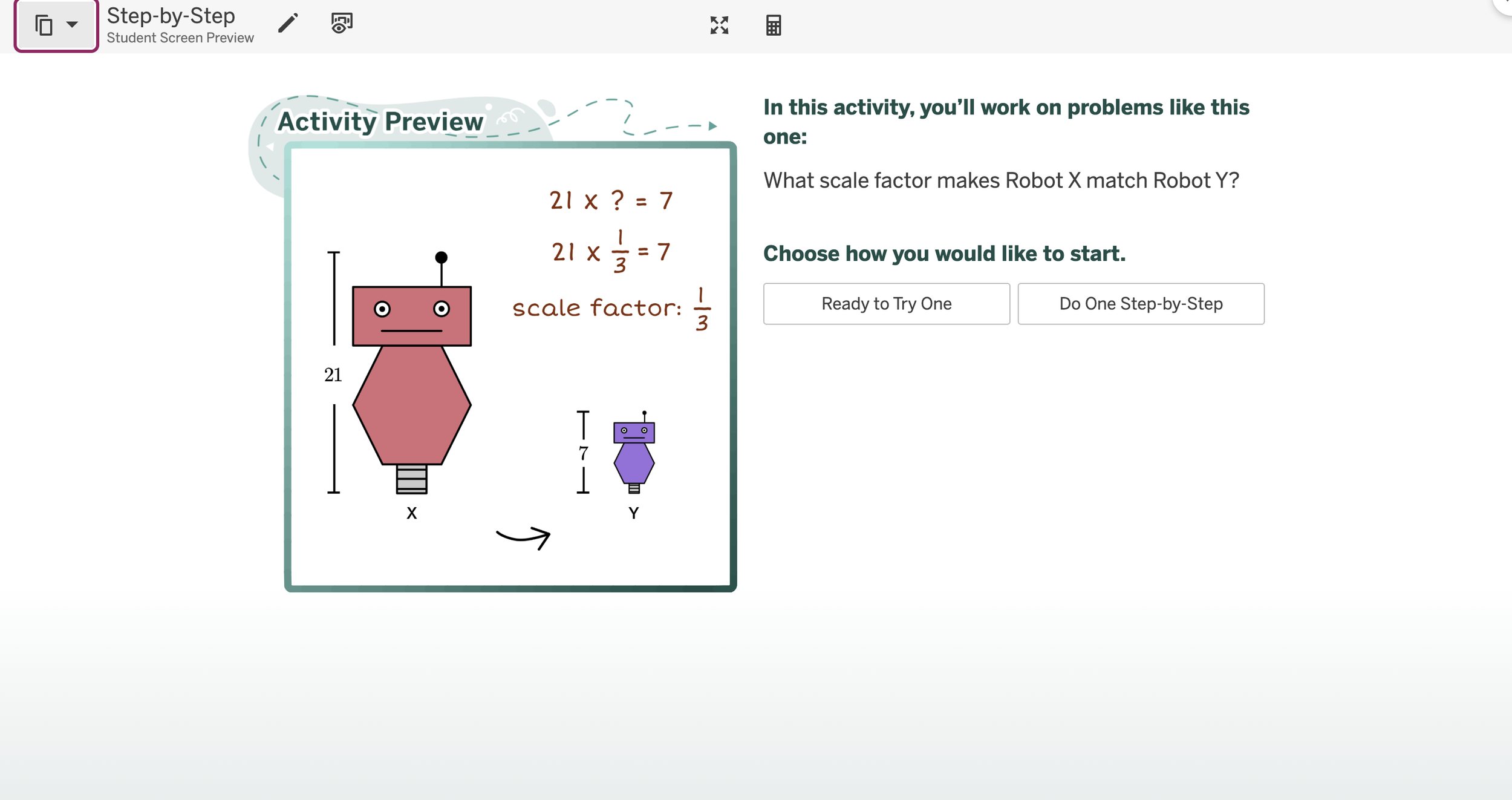
We tested whether guidance appeared at the right moments.
Key findings
Early intervention reduced engagement for Grades 6–8.
6-8 Students were more likely to choose Try one over doing the activity Step by step.
Younger learners benefited from earlier support.
Design change
We delayed guidance for older learners, increasing opportunities for independent exploration before intervention. These findings confirmed that guidance timing—not simply guidance availability—had the greatest impact on engagement.
Impact
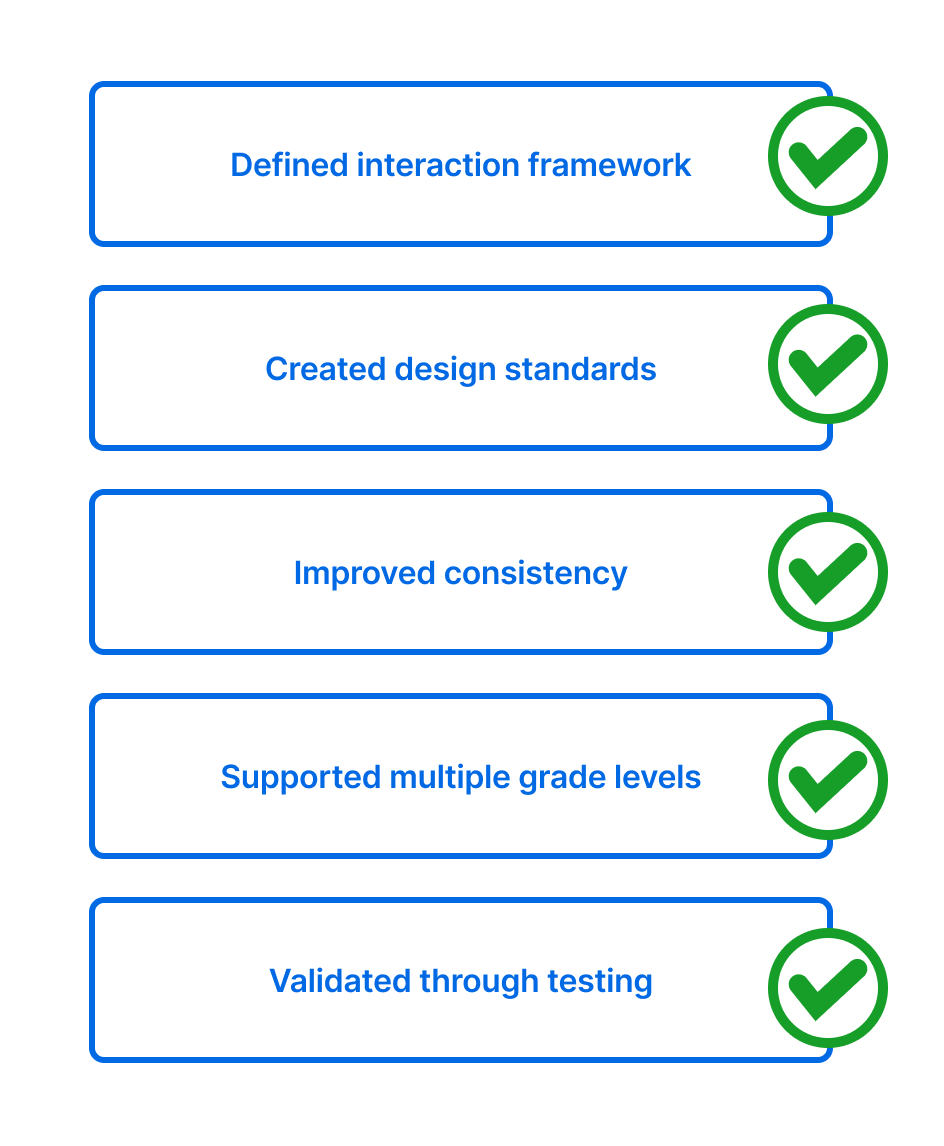
Defined a reusable interaction framework for K–8 guidance.
Enabled age-appropriate support without creating separate interaction paradigms for each activity.
Created implementation-ready documentation used across Design and Engineering.
Established consistent Virtual Tutor behaviors across hundreds of learning activities.
Refined guidance timing through usability testing.
Reflection
This project reinforced a key principle in interaction design:
Effective systems are not defined by how much guidance they provide, but by when that guidance appears.
Designing the Virtual Tutor wasn't about making guidance more visible—it was about defining interaction rules that introduced support only when it added value. That principle continues to shape how I think about designing adaptive systems today.